
Latest Blogs
Carnatic Vocal Training Guide for Beginners

Carnatic Vocal Training: Basic Concepts Every Beginner Should Know
Carnatic music, a classical music tradition originating from South India, is known for its intricate rhythms, melodies, and rich vocal traditions. For beginners looking to embark on their Carnatic vocal lessons, understanding the fundamental concepts is essential for a successful learning journey. This form of music requires not only an understanding of theory but also rigorous practice and dedication.
In this blog post, we’ll explore the key concepts of Carnatic vocal training that every beginner should know, from basic swaras (notes) to practice methods like sarali varisai, and other essential elements of vocal music training.
1. What is Carnatic Music?
Before diving into the intricacies of Carnatic vocal lessons, it’s important to have a basic understanding of Carnatic music itself. Originating in Southern India, Carnatic music is one of the oldest systems of music in the world and is characterized by its emphasis on vocals and rhythmic complexity. While it includes instrumental music, it is predominantly vocal in nature.
Key Features of Carnatic Music:
- Swaras (Notes): The foundational sound units in Carnatic music. There are seven basic swaras in Carnatic music: Sa, Re, Ga, Ma, Pa, Dha, and Ni.
- Ragas (Melodic Scales): A raga is a framework of musical notes that evokes a particular mood or emotion.
- Talas (Rhythmic Cycles): Talas refer to the rhythmic cycles, and they are essential for understanding the beats and timing in Carnatic music.
As a beginner in Carnatic vocal training, your focus will be on mastering swaras, understanding ragas, and learning the different talas to help you become proficient in this intricate musical system.
2. Understanding Swaras in Carnatic Music
Swaras are the basic building blocks of Carnatic music. They are the musical notes that form the melody in a piece of music. Understanding swaras and their correct pronunciation is crucial in Carnatic vocal training.
The Seven Swaras in Carnatic Music:
- Sa (Shadja): The tonic note, considered the root of all other notes.
- Re (Rishabha): The second note, with a slight variation in its pitch.
- Ga (Gandhara): The third note, which is slightly flatter than the western scale’s B.
- Ma (Madhyama): The fourth note, often seen as a bridge between the lower and higher registers.
- Pa (Panchama): The fifth note, which remains constant and stable in most ragas.
- Dha (Dhaivata): The sixth note, which has an emotional, melodic quality.
- Ni (Nishada): The seventh note, which is often considered the most complex and has several variations.
Each svara must be mastered through vocal music training, where you’ll learn to sing each note correctly and in its pure form, which is essential for perfecting ragas.
3. Introduction to Sarali Varisai Practice
Sarali varisai is one of the most fundamental exercises in Carnatic vocal lessons and is primarily used to train beginners in the basic swaras. These exercises help in developing the vocal strength, breath control, and familiarity with the notes.
What is Sarali Varisai?
Sarali varisai is a set of simple patterns or sequences of swaras that progress gradually in difficulty. These practice exercises generally start with the basic swaras (Sa, Re, Ga, Ma, Pa, Dha, Ni, Sa) and move on to more complex variations.
Why is Sarali Varisai Important?
- Strengthens the voice: Helps in building a strong vocal foundation and improving voice quality.
- Aids in pitch control: Regular practice of varisai improves pitch accuracy and tuning.
- Develops breath control: Teaches students to maintain consistent breath while singing.
- Improves note clarity: Enables students to master the pronunciation and clarity of each note.
Sarali varisai practice is vital for every beginner to get comfortable with swaras and basic rhythms, which are essential to progressing in Carnatic music.
4. The Role of Ragas in Carnatic Music
Ragas are one of the most important components of Carnatic music. A raga is essentially a set of musical notes that is meant to evoke specific emotions or moods. Understanding ragas is an integral part of Carnatic vocal lessons and is typically introduced once you have a firm grasp of the swaras.
How Ragas Affect Vocal Training:
- Emotional expression: Each raga is designed to evoke a particular emotion or feeling, such as joy, sadness, or devotion.
- Melodic complexity: Ragas have specific note patterns that need to be followed correctly, and they are often intricate and complex.
- Voice modulation: Singing in different ragas requires a deep understanding of how to modulate your voice and pitch, a skill developed through vocal music training.
For a beginner in Carnatic vocal training, it’s essential to learn basic ragas as a way to understand the emotional depth of the music. As you progress, you’ll become more adept at performing these ragas with precision and feeling.
5. Talas: The Rhythmic Foundation
In Carnatic music, talas represent rhythmic cycles that dictate the timing and beats of a musical composition. Learning how to align your voice with the talas is just as important as mastering the swaras and ragas.
Key Elements of Talas:
- Beats: Talas are made up of a specific number of beats, often grouped in a variety of ways to create rhythmic complexity.
- Common Talas: Some common talas in Carnatic music include Adi Tala (8 beats), Rupaka Tala (6 beats), and Tisra Tala (10 beats).
- Rhythmic accuracy: Talas help you stay on track with the timing of the music, ensuring that you sing each note at the correct moment.
As a beginner, you will need to learn the basic talas and practice syncing your voice with the beats. This helps in ensuring that your performance is not only melodically accurate but also rhythmically precise.
6. The Importance of Consistent Practice
Carnatic music demands consistent and dedicated practice. As a beginner, it’s essential to regularly practice swaras, sarali varisai, and basic ragas to build a strong foundation.
Tips for Effective Practice:
- Practice regularly: Set aside time every day to practice your lessons, focusing on your vocal strength, pitch accuracy, and rhythm.
- Slow practice: Start slow to ensure you’re mastering the notes and rhythms before increasing speed.
- Use recordings: Listen to recordings of experienced Carnatic vocalists to understand how they approach different swaras and ragas.
- Seek feedback: Regularly seek feedback from a teacher to identify areas for improvement.
Consistent practice will allow you to build your skills steadily, giving you the confidence to progress from basic to advanced levels of Carnatic vocal training.
Conclusion
Starting Carnatic vocal lessons is an exciting journey, and understanding the basic concepts such as swaras, sarali varisai, ragas, and talas will lay the foundation for your success. With consistent practice, dedication, and guidance, you will be able to master the intricate art of Carnatic singing.
Whether you’re a complete beginner or have some experience, embracing these basic concepts will help you develop a deeper appreciation for the beauty of Carnatic music while building your vocal strength and confidence.
Ready to begin your Carnatic music journey? Contact Deepthi's Divine Daivik Diksha for personalized vocal lessons:
📍 Address: 803, Shubh Aaugusta Society, Dholepatil Farms Road, Tulaja Bhawani Nagar Kharadi, Pune, Pincode - 411014
📞 Phone: +91 74995 78804
📧 Email: divinedaivikdiksha@gmail.com
Start your classical singing adventure today and bring the divine music of Carnatic traditions into your life!
Recent Blogs

Life Lessons from Bhagavad Gita for Students
Read Full Blog
Carnatic Vocal Training Guide for Beginners
Read Full Blog
Benefits of Learning Multiple Languages for Students
Read Full Blog
How Public Speaking Classes Improve Confidence
Read Full Blog
Carnatic Flute Classes Online – Flute vs Violin for Beginners
Read Full Blog
Learn Bhagavad Gita Online – Life Lessons for Kids & Adults
Read Full Blog
Online Shloka Classes – Spiritual Growth for Kids & Adults
Read Full Blog
Online Carnatic Vocal Classes – Learn Classical Singing from Home
Read Full Blog
How-to-Learn-Shlokas?
Read Full Blog
Why Learning Violin Is a Great Choice?
Read Full Blog
How long does it take to learn Carnatic music?
Read Full Blog
How to Practice Bharatanatyam
Read Full Blog
Benefits of Joining Online Carnatic Vocal Classes for Kids and Adults
Read Full Blog
How to Choose the Best Online Carnatic Vocal Classes?
Read Full Blog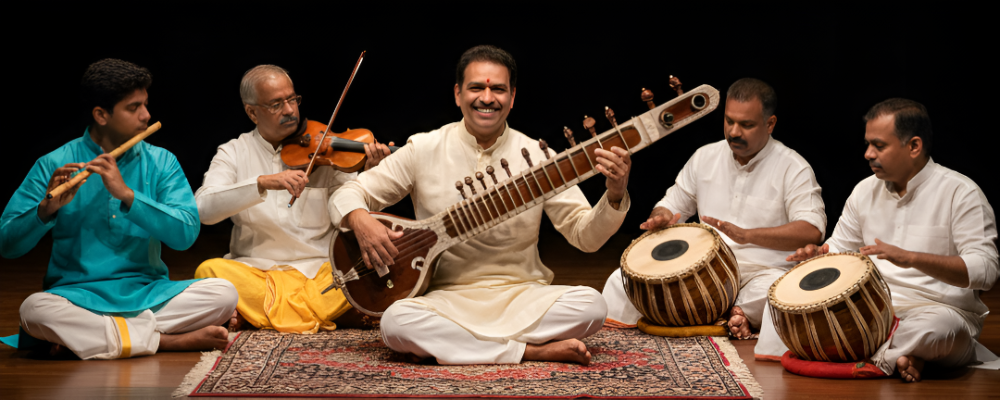
Top 6 Instruments to Learn in Carnatic Music
Read Full Blog